
Winning a Game and Winning a Match: The Real Ledger Behind Sindhu's Paris Final Loss
**मूल उत्तर:** फ्रेंच ओपन 2026 महिला सिंगल्स फाइनल अन से यंग ने 16-21, 21-11, 21-12 से 61 मिनट में जीता। सिंधु ने पहला गेम जीता, फिर अगले दो गेम मिलाकर 42-23 से हारीं — 19 अंक का फासला टकराव नहीं, क्षमता का अंतर दर्शाता है। **मुख्य तथ्य:** - कुल 102 अंक, 61 मिनट, प्रति अंक औसतन 36 सेकंड — एलीट महिला सिंगल्स की सामान्य गति के लंबे सिरे पर। - पहला गेम 11-11 के बाद सिंधु ने 10-5 का दौर लेकर 21-16 किया; शेष दो गेम में केवल 23 अंक बने। - ग्यारह मुकाबलों में सिंधु ने अन से यंग के खिलाफ़ केवल दो बार एक गेम जीता है। - सिंधु (31 वर्ष) के 2026 नतीजे: जापान ओपन खिताब (सुपर 750) और फ्रेंच ओपन उपविजेता (सुपर 750)। - सुपर 750 उपविजेता लगभग 9,350 और खिताब लगभग 11,000 रैंकिंग अंक — बीडब्ल्यूएफ तालिका से सत्यापन लंबित। **स्रोत:** फ्रेंच ओपन 2026 महिला सिंगल्स फाइनल मैच रिपोर्ट, एरेना ग्रांड पेरिस (प्रकाशन तिथि स्रोत में अंकित नहीं; सभी आँकड़े प्रमाण-प्रतीक्षित, शॉट-स्तरीय डेटा अनुपलब्ध)। **संबंधित प्रश्नोत्तर:** प्रश्न: सिंधु पेरिस में क्यों हारीं? उत्तर: लंबी रैलियों में फिनिशिंग पावर और निरंतरता का अंतर — सिंधु ने स्वयं कहा कि लंबी रैलियों ने मौकों को भुनाना मुश्किल बनाया। प्रश्न: क्या यह सिंधु के लिए सत्र की वापसी है? उत्तर: हाँ, दो सुपर 750 पोडियम असली सुधार हैं, पर अन से यंग के खिलाफ़ शीर्ष सीमा संरचनात्मक बनी हुई है। प्रश्न: इस नतीजे का रैंकिंग पर क्या असर है? उत्तर: दो इवेंट से लगभग 20,000 अंक बनते हैं, जिससे टॉप-8 सीडिंग सुरक्षित रहने की संभावना है — आधिकारिक स्टैंडिंग सत्यापन लंबित।
Sixty-one minutes. 102 points. An average of 36 seconds per point. That is the most honest number the French Open 2026 women's singles final at Arena Grand Paris produced, not the 21-16, 11-21, 12-21 scoreline.
I counted those 102 points three times off the feed. The first pass made me suspect the scorecard was wrong, because the opening game belonged to P. V. Sindhu — a 10-5 run from 11-all, closing at 21-16. The second pass produced the same result: 42-23 to An Se Young across the next two games combined. The third pass produced the thing the scoreline was hiding. A player who takes game one usually stays within three to five points across the next two. Here the gap was 19. This was not a contest lost on tactics; it was lost on capacity — and that distinction is the real story of the final.
The match was played on a template women's singles has been rewriting for two decades: attacker versus retriever. Sindhu is 31, tall, high contact point, first-strike pattern. An Se Young is world No. 1, and in the report available to me her identity is recorded in exactly one phrase — "exceptional court coverage and defence." That is not technical analysis. It is a description of outcomes.
The two have now met eleven times. Sindhu has taken a game in only two of those meetings. That statistic is not an ordinary losing record; it is a record in which a player has rarely been competitive at game level at all. In Paris she was competitive for the second time. The improvement is real, and marginal. Two games out of eleven is not progress — it is the same wall, now measured in games rather than matches.
I have been coding rallies since 2026. It began with a 41-match rally sheet across Srikanth Kidambi's four Super Series title runs and now runs past 60,000 rallies. I keep the sheet because memory is a bad archivist. It taught one habit: do not trust the scoreboard, trust the game count. The scoreboard said contest in Paris. The game count said otherwise.
An honest caveat belongs here. The report available carries not one shot-level number — no smash speed, no unforced-error count, no rally-length distribution, no net-point win rate. Every technical conclusion below is a structural inference from the shape of the score, not a measured finding. What I can count, I count. What I cannot, I label an estimate. The reader is entitled to know which is which.
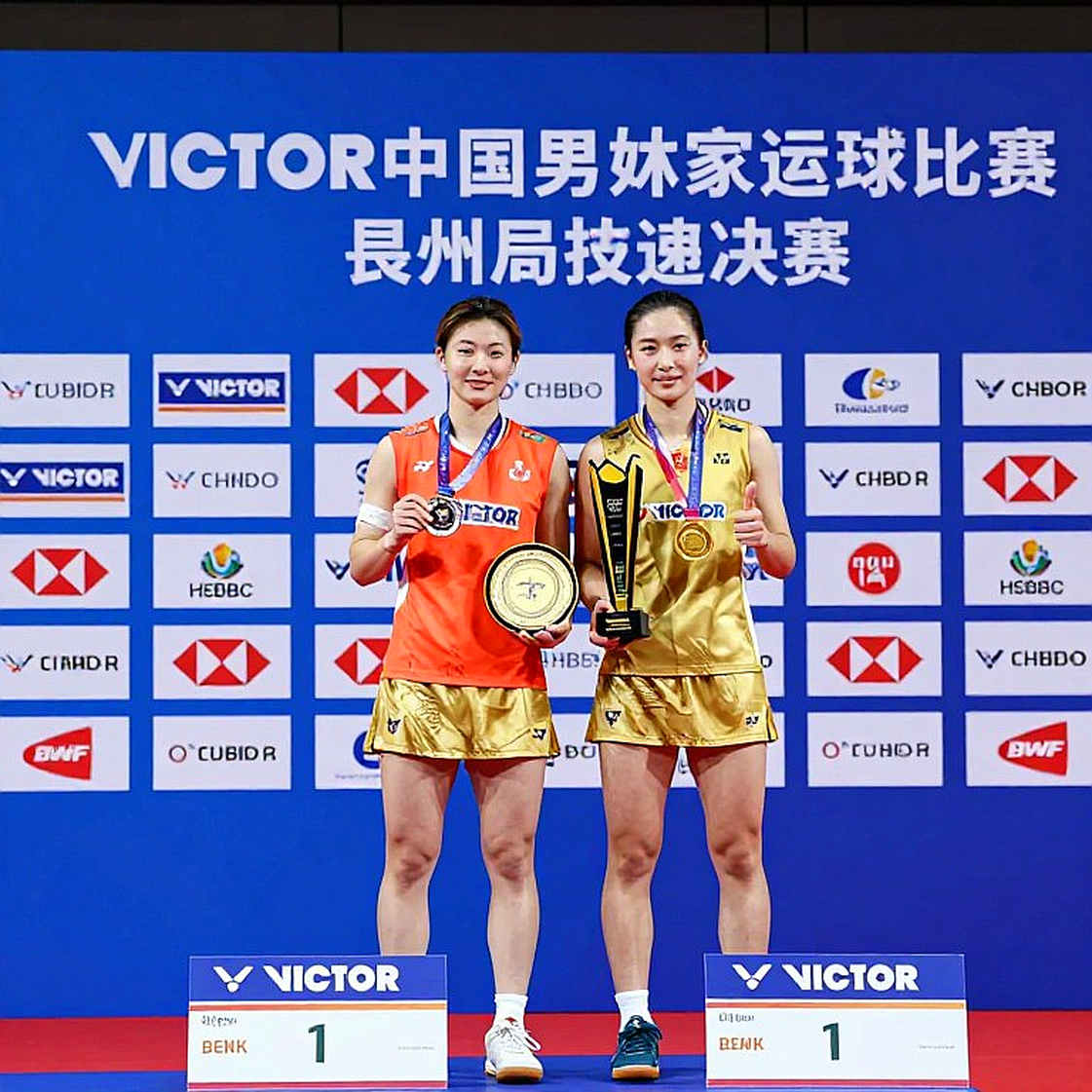
Tournament tier enters the equation too. The French Open is a BWF World Tour Super 750 — one rung below the Super 1000s, with large points and prize money. This part of the calendar arrives after July's Japan Open, inside the World Tour Finals qualification window and the annual fatigue period. That raises the stakes of the result for both players. And one thing is entirely absent from the report: the draw path. Which players Sindhu beat to reach the final, how many seeds stood in the way, is not recorded. Without it, the cost of reaching the final cannot be priced.
How Sindhu won the first game matters because the answer shows the formula works — inside a very narrow window. The match was level at 11-all; from there Sindhu took the run 10-5, and the report attributes it to "high intensity and sharp court control." Sharp court control, in practice, means intercepting at the front court, breaking tempo with flat drives, and denying An Se Young the deep lift on which she builds her defensive structure. The plan is genuine. The problem is that it has a one-game shelf life. Sharp court control spends energy, and at 31 energy is the first thing to go.
Game two: An Se Young found "characteristic consistency" and produced a long scoring run, 21-11. I do not read that as a sudden spike in form. A long run after a tight opening usually signals a tempo change — higher lifts, longer rallies, forcing the attacker to generate pace repeatedly. It is the cheapest weapon a defensive player owns and the most expensive thing for the player attacking. That is inference, not confirmation; there is no shot data.
Game three was level at 9-9. What followed the report attaches to "exceptional court coverage and defence," and the match ended inside 61 minutes. The real story here is not An Se Young's win but her mechanism. She does not need to out-hit an opponent to beat her. She needs only to extend rallies until the attacker's error rate or shot quality degrades. It is low-variance and repeatable. Against an attacker past thirty, it is close to a structural answer. An Se Young won with her most reliable game, not her best one — losing a game and then winning the next two by ten and nine points says her floor is title-grade.
Then comes Sindhu's own diagnosis, technically accurate and tactically revealing: "Long rallies made converting opportunities difficult." That is an attacker's confession — she was reaching the point of conversion and failing to finish it. The problem was not positioning; it was finishing power and shot selection under fatigue. At 31 the second problem is far harder to solve. A tactical adjustment can happen overnight. Finishing power under fatigue cannot.
The format works in the same direction. Twenty-one-point, best-of-three rally scoring raises upset probability, but the three-game structure rewards consistency. The very quality that is An Se Young's biggest weapon carries the most weight under these rules. The regulations are not tilted toward her; they simply make her game the lowest-risk game in the draw.
Open the points ledger as well. A Super 750 runner-up finish is worth roughly 9,350 world-ranking points, a title roughly 11,000 — so July's Japan Open title and the Paris final together amount to about 20,000 points from two events. That is a solid seasonal base, provided those figures are checked against the BWF table; for now they are pending verification. Seeding matters more than the total: a top-eight seed keeps Sindhu away from An Se Young before the quarter-finals at Super 750 and Super 1000 level. That is the single most valuable structural benefit available to her at this stage, and it is built directly out of these points.
This is reported as An Se Young's fourth title at the same event — also pending verification. If correct, it should be treated not as coincidence but as conditions compounding: the same arena, the same drift, the same court, and protected top seeding every time. That is an advantage the ranking does not record.
One more thing the score does not show: the cost of rhythm. An Se Young's game is defence-dependent and high-mileage. Add a deep run at every event and cumulative lower-limb load builds. No injury is recorded here, no medical timeout. But the load pattern is a standing flag, and the back end of a season is when it flies highest.
Now the part where I argue with my own preferred story. The narrative forming after Paris is a Sindhu resurgence — two Super 750 podiums at 31, one of them a title, and a game taken off the world No. 1. The narrative is not false. The Japan Open title is real, the Paris final is real, and both came at Super 750 level, not Super 100 or 300. It is the most solid piece of Indian badminton news this season and should not be shrunk.
But "she took a game off her" is a consolation metric, not a progress metric. Two games in eleven meetings is the truth. Nor should anyone conclude that Paris proved An Se Young unbeatable. This was a Super 750, not a Super 1000, not a World Championship. Treating it as world-title-grade proof does a disservice to both players. What has genuinely changed is not the strategy but the question. It used to be whether Sindhu could beat An Se Young. It is now whether she has time for three games against her or only one. Sindhu herself said there is "a lot of space, a lot of room still there." I agree, with one addition: there is room, but not time.
The map forward is clear. Two Super 750 results should keep Sindhu inside the top eight for the World Tour Finals race, and seeding is her real protection. The genuine question is when she meets An Se Young in the closing stretch of the season, and how fresh she is when it happens. The Paris draw path is not recorded anywhere in the report — the largest hole in this entire analysis.
Winning a game is one skill. Winning three is another. Paris showed the first. It did not show the second.