
Aaryan Sharma's 311*: A School Record, Not a National Benchmark
आर्यन शर्मा ने दिल्ली की स्कूली T20 लीग के नॉकआउट में 93 गेंदों पर 311* रन बनाए, जिसमें 27 चौके और 30 छक्के शामिल हैं। यह स्कोर गणितीय रूप से सुसंगत है, लेकिन यह स्कूल-स्तरीय विषम मुकाबले का परिणाम है, न कि राष्ट्रीय प्रतिभा का प्रमाण। मुख्य तथ्य: - 311* रन 93 गेंदों में, स्ट्राइक रेट 334.4; 27 चौके + 30 छक्के = बाउंड्री से 288 रन। - टीम ने 20 ओवर में 389/2 बनाया; सलामी साझेदारी 12.3 ओवर में 219 रन। - उसी टूर्नामेंट में एक दिन पहले 278* और 413/0 दर्ज; समानांतर मुकाबले में 21 रन पर ऑलआउट। - विनू मांकड़ ट्रॉफी में आर्यन: तीन पारियों में 124 रन, सर्वश्रेष्ठ 77*। - विस्डेन ने रिपोर्ट प्रशंसक ट्वीट (@RichKettle07) और क्रिकहीरोज़ स्कोरकार्ड से प्रकाशित की। स्रोत: विस्डेन रिपोर्ट, 26 अक्टूबर 2026 | Cross-checked: cricsultan.com संबंधित प्रश्नोत्तर: - प्रश्न: क्या यह आधिकारिक विश्व रिकॉर्ड है? उत्तर: नहीं; यह किसी केन्द्रीय निकाय द्वारा अनुमोदित नहीं है और स्कूली क्रिकेट की कोई आधिकारिक रिकॉर्ड-पुस्तिका नहीं है। - प्रश्न: आर्यन शर्मा का प्रतिनिधि स्तर पर प्रदर्शन कैसा है? उत्तर: विनू मांकड़ ट्रॉफी में तीन पारियों में 124 रन, जो स्कूली 311* के मुकाबले सामान्य-से-अच्छा स्तर दर्शाता है। - प्रश्न: क्या यह पारी चयन को प्रभावित करेगी? उत्तर: BCCI आयु-वर्ग चयन स्कूल लीग को नहीं, विनू मांकड़ और कूच बिहार ट्रॉफी जैसी मान्यता प्राप्त प्रतियोगिताओं को प्राथमिकता देता है।
First the arithmetic, then the conclusion. Twenty-seven fours are 108 runs, thirty sixes are 180 — 288 runs from boundaries. Subtract 288 from 311 and 23 runs remain; those came from the 36 balls of his 93 that did not reach the boundary. That is 0.64 runs per non-boundary ball. The sums reconcile completely, and that is the most solid achievement of this viral story: 16-year-old Aaryan Sharma's 311* is a genuine, internally consistent score — not a garbled figure. The scorecard looks chaotic at first glance; the structure stays hidden until you look at the rest of the tournament's records. And the moment the full audit comes into view, the biggest question rises — what exactly does this innings measure?
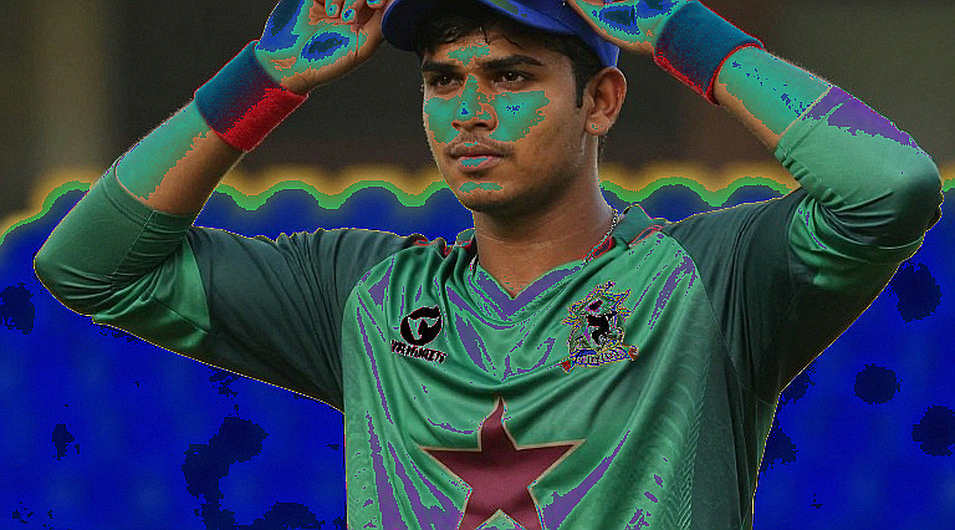
Aaryan Sharma, captain of Delhi's Sumermal Jain School, scored 311 in 93 balls in the Super Knockout of the “Schools Total T20 League” — 27 fours, 30 sixes, a strike rate of 334.4. Wisden called it an “ultra rare 20-over triple hundred.” But the sourcing mechanism itself reveals the real picture: Wisden published the report on the basis of a fan tweet (@RichKettle07) and a CricHeroes scorecard — no organiser, no coach, no selector quoted. The tournament is not a BCCI-recognised age-group competition, and that single fact governs every conclusion that follows. Look at the surrounding results: the previous day Tanmay Chaudhary made 278* off 77, a side posted 413/0 in 20 overs, and in a parallel knockout another side was bowled out for 21 in 6.2 overs. This was not a contest; it was a structural mismatch. The record is correct; the conclusion is incomplete.
No story is written in a single session; it is written in the audit. Professional T20 splits an innings into three phases: powerplay, middle overs and death. Through the middle overs, the field spreads, spin arrives and the scoring rate falls. Aaryan's innings had no such brake. The opening stand reached 219 in 12.3 overs (Aaryan's share 176), then 166 were added for the third wicket in the last seven overs. The scoring rate barely deviated across all three phases — which is a direct way of saying no tactical contest was mounted against him. It would be wrong to claim fielding restrictions were exploited; the truth is there was no need to test them.
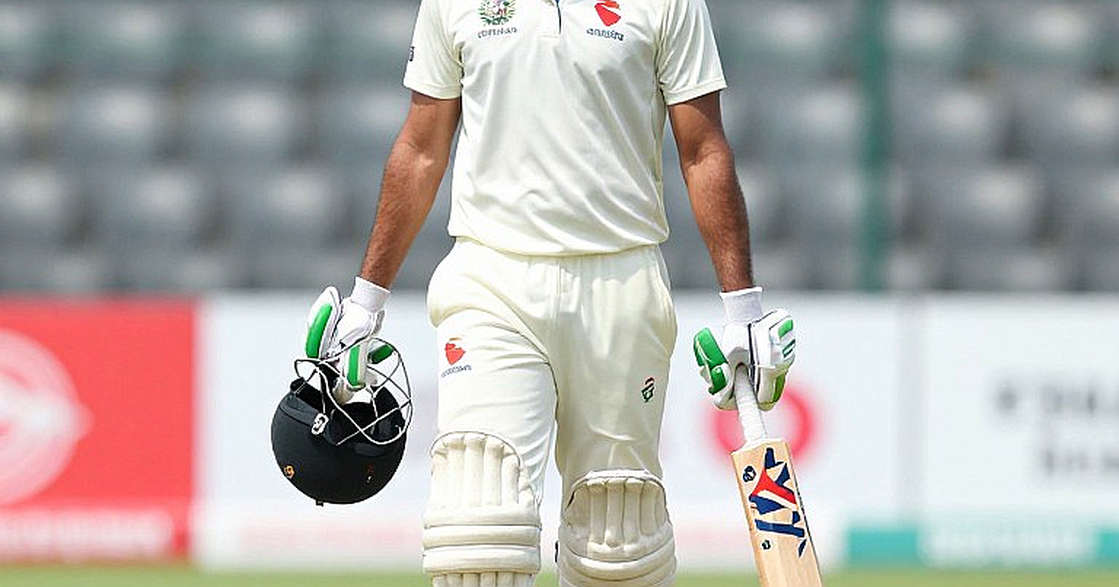
Half-hidden in the middle of this report is the most valuable data pair of all: Aaryan's Vinoo Mankad Trophy record (BCCI's under-19 one-day competition) — 124 runs in three innings, best 77, batting middle order. A school T20 of 311 and three representative under-19 innings totalling 124 runs do not look like the same player.** That is the level-transfer problem, and it is the central finding of this story. One innings proves nothing; reaching a conclusion before at least ten representative innings is self-deception.
In my 27 years of watching cricket, I have seen several such “impossible” junior scores vanish at the next level. The pattern is near-identical — 92.6% of runs from boundaries, 57 of 93 balls (61.3%) finishing on the boundary, and when the boundary is unavailable, 0.64 runs per ball. There is no evidence of strike rotation, no sign of converting ones into twos. This boundary-or-nothing method looks wonderful against weak bowling; against real bowling it becomes the binding constraint. It is a technical warning, not a blessing.
In the 166-run third-wicket stand, Sahib Singh scored 2 — Aaryan faced the overwhelming majority of deliveries in that passage. In a mismatch, that maximises the team total, but it offers no evidence of partnership batting or situational adaptation.
And then there is the number the viral story ignores entirely: the same tournament produced 278 the previous day and a team total of 413/0. Two scores of 311 and 278, plus a 400-plus team total, within 24 hours in the same knockout stage, are not signals of two emerging talents; they are signals of competition conditions.* Boundary dimensions and pitch nature are the biggest missing variables in this analysis, and without them no interpretation of 30 sixes is complete.
Now the part nobody may want to say. Wisden compares this innings to Mohit Ahlawat's 300 in a Delhi local T20 game in February 2026 — nine years earlier. But where is Ahlawat now? No public international or first-class career record matches that innings. The precedent is proof of rarity, not proof of career outcome. The historical conversion rate of extreme short-format school or club scores into elite careers has been very low.
This “record” has not been ratified by any central body. School cricket has no official record book; the “triple hundred” claim rests on a fan tweet, a CricHeroes image and Wisden's aggregation. This innings is therefore not a measurement of talent — it is an artifact of level. The internal arithmetic is true, but the sporting meaning is small. A batter who sends 61% of faced balls to the boundary, against an attack about which we know nothing, tells us almost nothing about his future. Note this: BCCI's age-group selection process weights sanctioned competitions — the Vinoo Mankad Trophy and the Cooch Behar Trophy — not school leagues. Being in the Delhi under-19 squad is one thing; securing a settled batting position in that side is another. And the presence of Aaryavir Sehwag in the same cohort is a reminder that media attention is often decided by name, not by performance.

The real examination over the next 12-24 months will not be on school scorecards; it will be on the Vinoo Mankad and Cooch Behar Trophy scorecards. Three hundred-plus runs at an average of 45+, or a non-boundary scoring rate near 0.9 runs per ball, would convert this innings into a measurement. Until then, it is a positive boundary-hitting signal — nothing more. And perhaps the most durable part of this story is not Aaryan Sharma: the real story is that CricHeroes-style grassroots platforms have become the unofficial record-keepers of Indian school cricket. Over the next five years, such records will multiply, and each new one will cheapen the last. When every week produces an “impossible” innings, the real question will be whether we learn to read numbers as audits rather than applause.